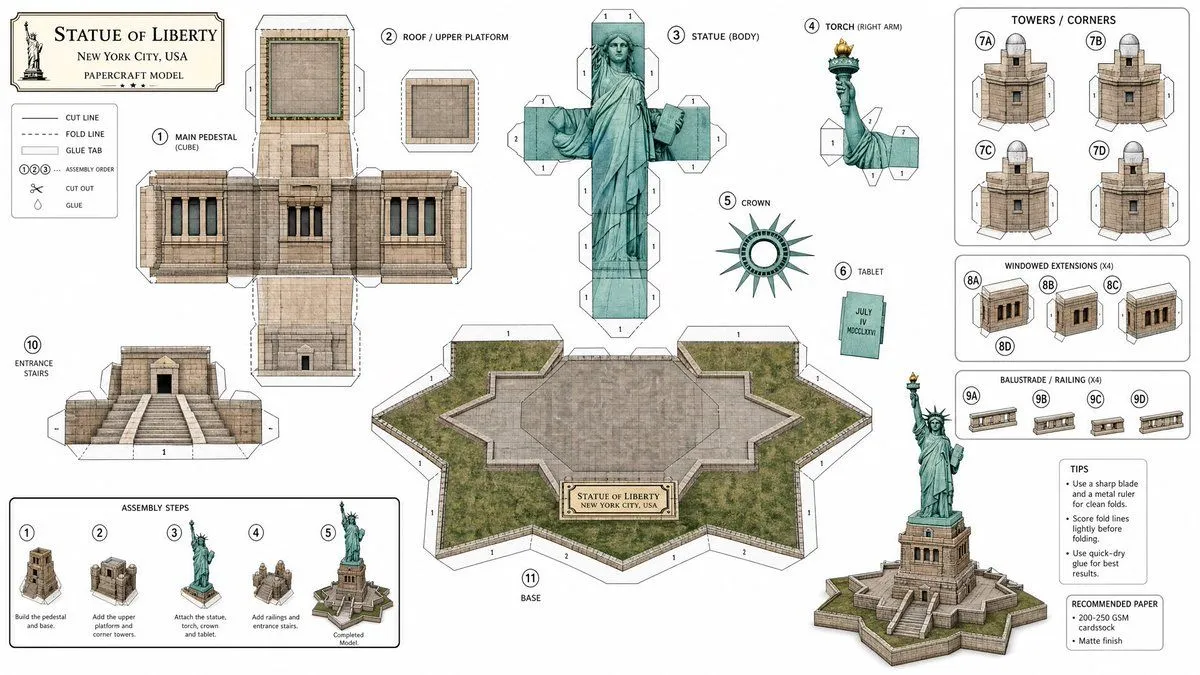
Papercraft Cube Model Template Generator
Use the selected landmark as the only source of architectural reference. Create a realistic, printable papercraft cube model of landmark_name, preserving its recognizable identity and unique architectural features: original silhouette, proportions, rooflines, towers, arches, windows, columns, decorative patterns, materials, and signature colors. Transform the landmark into a handmade paper craft 3D model using a low-poly geometric cube style, similar to a professional DIY papercraft kit. Show the complete unfolded cut-out template pieces laid flat on a clean white background, with clearly separated sections for the main structure, towers, roof, entrance, architectural extensions, decorative elements, and supporting base. The template must include: Main structure: A cube-shaped central building featuring the landmark’s authentic façade, recognizable architectural details, original colors, and realistic printed stone, brick, or surface textures. Roof and upper sections: Separate foldable pieces that accurately reproduce the landmark’s distinctive roof shape, domes, spires, ridges, or other defining features. Towers and extensions: Individual papercraft components for recognizable towers, minarets, bell towers, columns, arches, or side structures, depending on the landmark. Windows and entrances: Precisely positioned printed details that preserve the landmark’s original architectural identity. Decorative elements: Small foldable pieces for signature ornaments, railings, clock faces, carvings, or other historically recognizable features. Supporting base: A printable base with subtle ground textures and a small engraved-style label displaying the landmark’s name, city, and country. Printable template design: Every component must be unfolded and arranged flat, with visible solid cutting lines, dashed folding lines, numbered assembly sections, and properly sized glue tabs. All pieces should be logically connected or clearly separated, with realistic dimensions and enough white space to distinguish each component. The template must look like a genuine, usable papercraft kit rather than an assembled model photographed from above. Texture and realism: Print the landmark’s authentic architectural textures and colors directly onto the paper surfaces. Use realistic stonework, weathered brick, aged plaster, ceramic tiles, wood, or other materials appropriate to the actual building. Maintain the landmark’s recognizable proportions and historical character while adapting its structure into clean geometric paper components. Presentation: High-quality product photography, perfectly flat overhead view, pure white background, crisp paper edges, subtle natural shadows, fine printed textures, precise geometric folds, professional printable craft-sheet layout, and exceptional detail. Architectural accuracy is essential. Do not invent architectural features, alter the landmark’s silhouette, change its defining colors, or r